
Alabama voters will return to the polls on November 3 for a general election that will reshape the state’s political leadership and offer voters decisions on four proposed constitutional amendments. While the governor’s race is likely to draw the most attention, a number of other constitutional offices and legislative contests could have significant consequences for Alabama’s direction over the next four years.
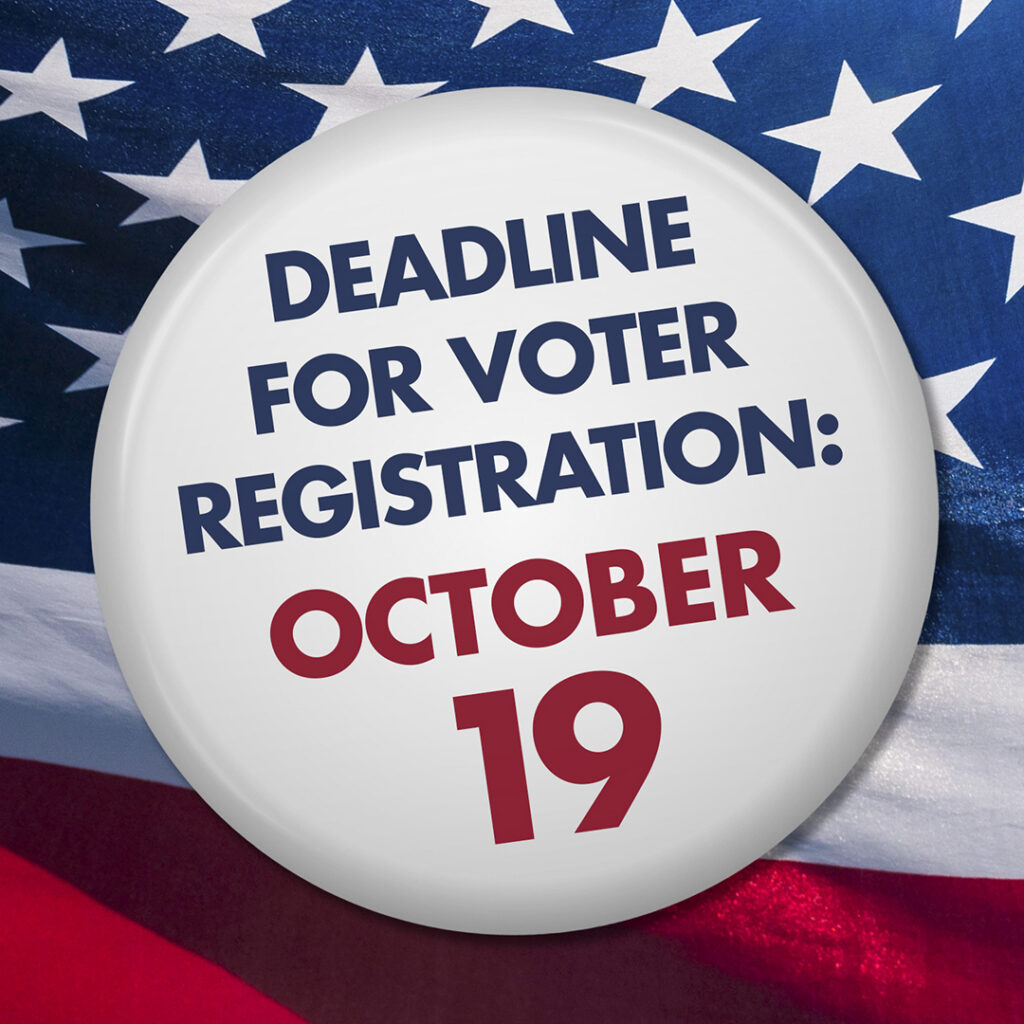
The deadline to register to vote is October 19. Visit Alabamavotes.gov to register, or to update your address.
Republican Gov. Kay Ivey will have served nearly 10 years as Governor and is constitutionally barred from seeking another term. Republican U.S. Sen. Tommy Tuberville won his party’s nomination and will face Democrat Doug Jones in November. The race represents a major transition for Alabama, where Republicans have dominated statewide elections for more than two decades.
The governor’s race is only one of several statewide contests. The lieutenant governor’s office is also open because Republican Will Ainsworth is also term limited. Republican John Wahl, a former state Republican Party chairman, will face Democratic state Rep. Phillip Ensler. The lieutenant governor presides over the Alabama Senate and can play a role in determining which legislative priorities receive attention.
Other statewide constitutional offices include attorney general, secretary of state, state treasurer, state auditor and commissioner of agriculture and industries. The attorney general’s race features Republican Katherine Robertson, a former deputy attorney general, against Democrat Jeff McLaughlin, a former state representative from Guntersville.
The secretary of state’s race pits Republican Caroleene Dobson against Democrat Wayne Rogers. The secretary of state serves as Alabama’s chief elections official. The treasurer’s race features Republican incumbent Young Boozer against Democrat Rosilyn Houston, while Republican State Auditor Andrew Sorrell faces Democrat Violet Edwards, who currently serves as a Madison County Commissioner.
Here’s a sample ballot for Madison County.
Voters will also decide on four proposed amendments to the Alabama Constitution. The measures cover subjects ranging from the lieutenant governor’s succession to public education.
Amendment 1 would establish a process for filling a vacancy in the lieutenant governor’s office if the vacancy occurs more than 60 days before the next general election. It would also give the Legislature authority to establish compensation for the lieutenant governor and legislative officers through a joint resolution. The amendment was sponsored by Sen. Sam Givhan of Huntsville and passed both legislative chambers unanimously.
Amendment 2 would create a process for consolidating two or more contiguous county school systems. The proposal calls for an impact study by the State Board of Education, publication of that study and a procedure for protesting a proposed consolidation.
Education is also at the center of Amendments 3 and 4. Amendment 3 would require public K-12 schools to recite the Pledge of Allegiance at the beginning of each school day and authorize local school boards to adopt policies allowing student-initiated and student-led prayer. Students who choose not to participate would be permitted to leave the classroom during the pledge or prayer.
Amendment 4 would require public schools to broadcast or sanction a performance of the first stanza of “The Star-Spangled Banner” at least once each week during school hours. The measure specifies that performances must use the version of the anthem preserved by the Library of Congress.
For voters in Madison and Limestone counties, however, some of the most consequential decisions may be much closer to home.
The region’s most closely watched legislative contest is likely to be Alabama Senate District 2, an open seat covering western Madison County and portions of eastern Limestone County. Longtime Republican Sen. Tom Butler is not seeking reelection, creating an opportunity for a new senator in one of North Alabama’s fastest-growing areas. Republican John Roberts will face Democrat Rudolph Drake in November.
The district could provide one of the clearest tests of whether North Alabama’s rapid population growth is beginning to alter its political landscape. In 2022, Butler won the district with 55.5% of the vote. But estimates based on the 2024 presidential election showed Democrat Kamala Harris carrying the district by a fraction of a percentage point.
Another important contest is House District 25, which covers most of western Huntsville and portions of Limestone County. Republican incumbent Phillip Rigsby is seeking another term against Democrat Allison Montgomery. Rigsby won 57.9% of the vote in 2022, but Donald Trump’s margin in the district in 2024 was considerably narrower than his statewide performance, another indication that the district may be becoming more competitive.
Those races illustrate the broader political change in Madison and Limestone counties. North Alabama continues to attract workers connected to Redstone Arsenal, NASA, defense contractors, engineering firms and other high-growth industries. It remains to be seen whether the influx of new voters will have an impact on the political dynamics of the region.
Alabama’s general election will ultimately be decided across many different political landscapes, but the November ballot offers voters both statewide and intensely local choices. The constitutional amendments could impact how state government and public schools operate, while races for governor and other constitutional offices will determine who administers those policies.
Election Day is Nov. 3. Make a plan to get to the polls. If you can’t get there on election day, here is information on absentee voting.
By Mike Ward
Senior VP, Government & Public Affairs
Huntsville/Madison County Chamber